
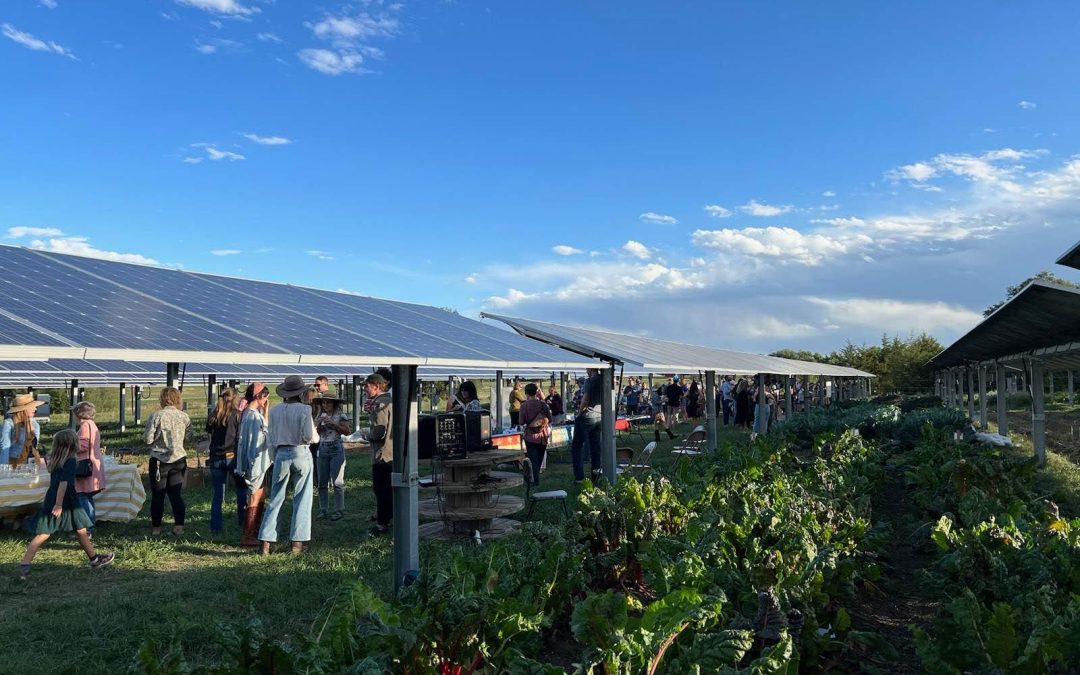
Photo credit: American Solar Grazing Association
In 2025, the USDA released its Farmers First Agenda, issuing a call to action to federal, state, regional, and local partners to join USDA’s new Make Agriculture Great Again Agenda. The agenda overviews concerns about the use of productive farmland for solar installations, reinforcing a narrative that energy development and agriculture are inherently in conflict. To address the growing anti-solar sentiment, RCP has launched a coordinated, multi-year Farm Viability and Solar Initiative to preserve farmers’ rights to diversify their incomes with solar and support resilient rural communities. The Farm Viability and Solar Initiative is elevating the voices of farmers and ranchers who have directly benefited from solar projects on their land and who are showing that solar and farmland can work together with agrisolar. Through advocacy, coalition building, and strategic communications, these rural producers will engage policymakers to make the case for preserving farmers' rights to benefit from solar on farmland.
Reframing the Narrative Around Solar and Farmland
The stakes are high. Rural America has the land resources to build the solar capacity needed to meet rising energy demand, bring new tax and lease revenue to rural communities, and decarbonize our energy system. But none of that can happen at the scale we need without using some farmland for solar. The American Farmland Trust estimates 83% of new solar projects will need to be built on agricultural land of some kind. Yet in 2025 alone, more than 305 siting-related bills were introduced across 47 states, and half of these would make clean energy siting more difficult. In addition, USA Today found that 24% of U.S. counties now have ordinances that make it difficult or impossible to develop large-scale wind or solar projects.
At the federal level, the reintroduction of the Protect American Farmland Act has been accompanied by notable pushback at the USDA. In 2025, the USDA also announced that large ground-mounted solar arrays on farms would be banned from getting Rural Energy for America Program (REAP) loan guarantees and highly unlikely to get REAP grants. This change significantly limits farmers’ ability to finance solar projects and diversify their income.
Opportunities to Organize
The Farm Viability and Solar Initiative brings together several organizations committed to maintaining farmers’ and landowners’ right to host solar on their farms and realize the economic opportunities that come with it. Together, this Working Group is advancing grassroots organizing in support of solar on farmland and agrisolar, targeted government relations, and public education. The group aims to prevent harmful regulations or blunt restrictive policies, and to ensure rural communities can continue benefiting from the clean energy transition. The path to national decarbonization runs through rural America and its farmlands. By protecting solar on working lands, the Farm Viability and Solar Initiative aims to safeguard both rural livelihoods and a clean energy future.
A Coordinated Response to Protect Farmers' Rights
That work is already underway. In February, the Farm Viability and Solar Initiative Working Group organized its first fly-in to Washington, D.C., during which five agricultural producers associated with Working Group member orgs met with key federal policymakers. Farmers are rural leaders, and by leading this group, they were able to meet with policymakers who would likely have dismissed other pro-solar voices, such as those from solar industry associations or environmental groups. Over several days, the group met with USDA staff, a White House representative, nine members of Congress, and the House Agriculture Committee Majority staff to share personal stories and explain the benefits of solar energy development for farmers and landowners. By focusing on their experiences as solar grazers, the producers shifted the discussion to one centered on farm viability and rural stability, rather than on energy sources.
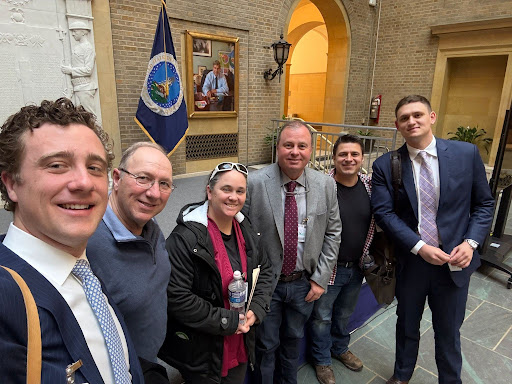
Photo credit: Skyler Zunk, Energy Right
Farmers Leading the Conversation in Washington
The group’s message was consistent and direct: solar has kept farming operations viable and provided new streams of income for farmers and rural communities. Further, solar on farmland is a dual crop; harvesting the sun and the animal protein of the livestock that producers are raising. Policies that restrict solar on farmland threaten farmers’ livelihoods and rural economies. Across meetings, the producers shared the importance of voluntary land-use decisions, the benefits of private capital investment and rural economic growth, and the compatibility of solar with grazing and agricultural production. Even more significantly, participants explained to lawmakers that solar on farmland enables farmers to continue farming land that has been in their families for generations, providing a viable economic alternative to selling their land to corporate agricultural interests or shuttering their farms entirely.
Building Momentum at the Federal Level
The fly-in marked the beginning of sustained engagement and lays important groundwork for future collaboration with federal leaders. The second fly-in to Washington, DC took place in April, during which three agricultural producers met with seven members of Congress, including high-ranking members of the Senate Committee on Agriculture. A third fly-in will take place in June, ensuring the Working Group successfully sets the foundation for sustained engagement and lays important groundwork for future collaboration with federal leaders.
While a federal approach is the first focus of the Farm Viability and Solar Initiative, in the coming months the Working Group plans to build out strategies to engage with state and local solar siting policies. As part of its broader effort, it is developing fact sheets and other supporting materials to help shape the national narrative about the benefits of solar development on farmland. It will share the final fact sheet with key partners and stakeholders in the coming weeks.
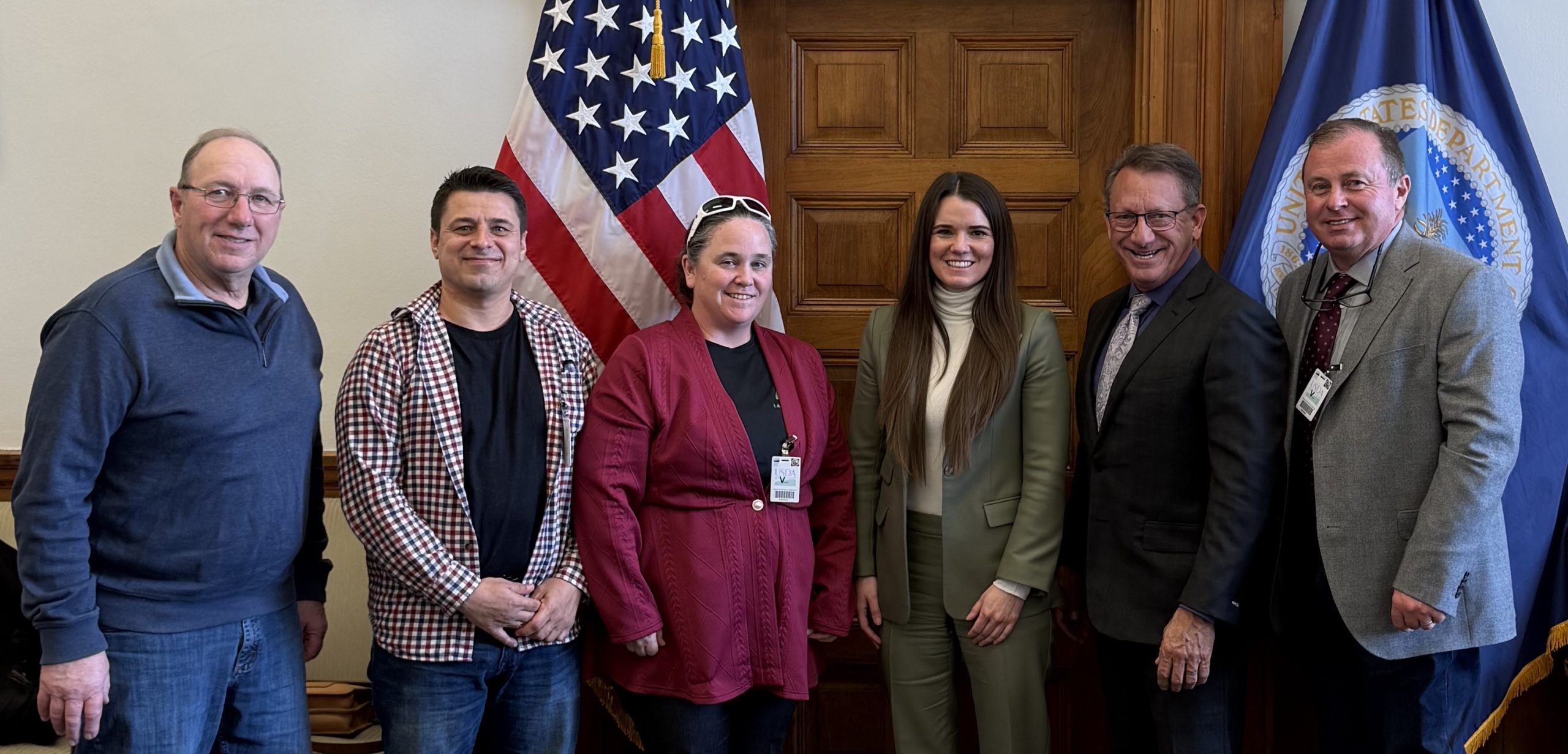
Photo credit: Skyler Zunk, Energy Right
 English (United States)
 English (UK)
 Spanish (Mexico)
 Spanish (Spain)
 Catalan
 Basque
 Chinese (China)
 Chinese (Hong Kong)
 Chinese (Taiwan)
 Vietnamese
 Arabic
 Moroccan Arabic
 German
 French (France)
 French (Canada)
 Urdu
 Gujarati
 Hindi
 Persian
 Greek
 Hebrew
 Lao
 Ukrainian
 Thai
 Uzbek
 Uighur
 Tatar
 Turkish
 Telugu
 Tamil (Sri Lanka)
 Tamil
 Silesian
 Swahili
 Swedish
 Serbian
 Albanian
 Slovenian
 Saraiki
 Slovak
 Sinhala
 Sindhi
 Sakha
 Romanian
 Rohingya
 Portuguese (Portugal)
 Portuguese (Brazil)
 Portuguese (Angola)
 Pashto
 Polish
 Panjabi
 Occitan
 Norwegian
 Nepali
 Dutch
 Norwegian
 Myanmar
 Malay
 Mongolian
 Malayalam
 Macedonian
 Latvian
 Lithuanian
 Kyrgyz
 Kurdish
 Korean
 Kannada
 Khmer
 Kazakh
 Kabyle
 Georgian
 Javanese
 Japanese
 Italian
 Icelandic
 Indonesian
 Armenian
 Hungarian
 Upper Sorbian
 Croatian
 Hazaragi
 Galician
 Scottish Gaelic
 Frisian
 Friulian
 Finnish
 Estonian
 Dzongkha
 Lower Sorbian
 Danish
 Welsh
 Czech
 Cebuano
 Bosnian
 Tibetan
 Bengali
 Bulgarian
 Belarusian
 Azerbaijani
 Assamese
 Aragonese
 Amharic
 Afrikaans