

The American Farmland Trust estimates about 83% of new solar projects will be built on agricultural land, and emerging legal threats to renewable energy siting make the imperative to effectively scale solar developments all the more urgent.
“Any impediments to deploying solar arrays on farm land will slow the clean energy transition and efforts to address climate change,” warned RCP Senior Working Lands Adviser Scott Laeser at a recent webinar.
And impediments abound. In many rural communities, the vocal local sentiment is cautious about or opposed to renewable development opportunities, driven by concerns about changes to land use and community character and also by mis- and disinformation pushed by the fossil fuel industry. But in July, RCP joined grantees and partners to illuminate a path forward that supports rural communities, creates resiliency, and advances our clean energy goals.
“I think if we lean in, despite all the challenges, we can make this moment an inflection point for the deployment of agrivoltaics,” said Scott.
‘A HUGE OPPORTUNITY’
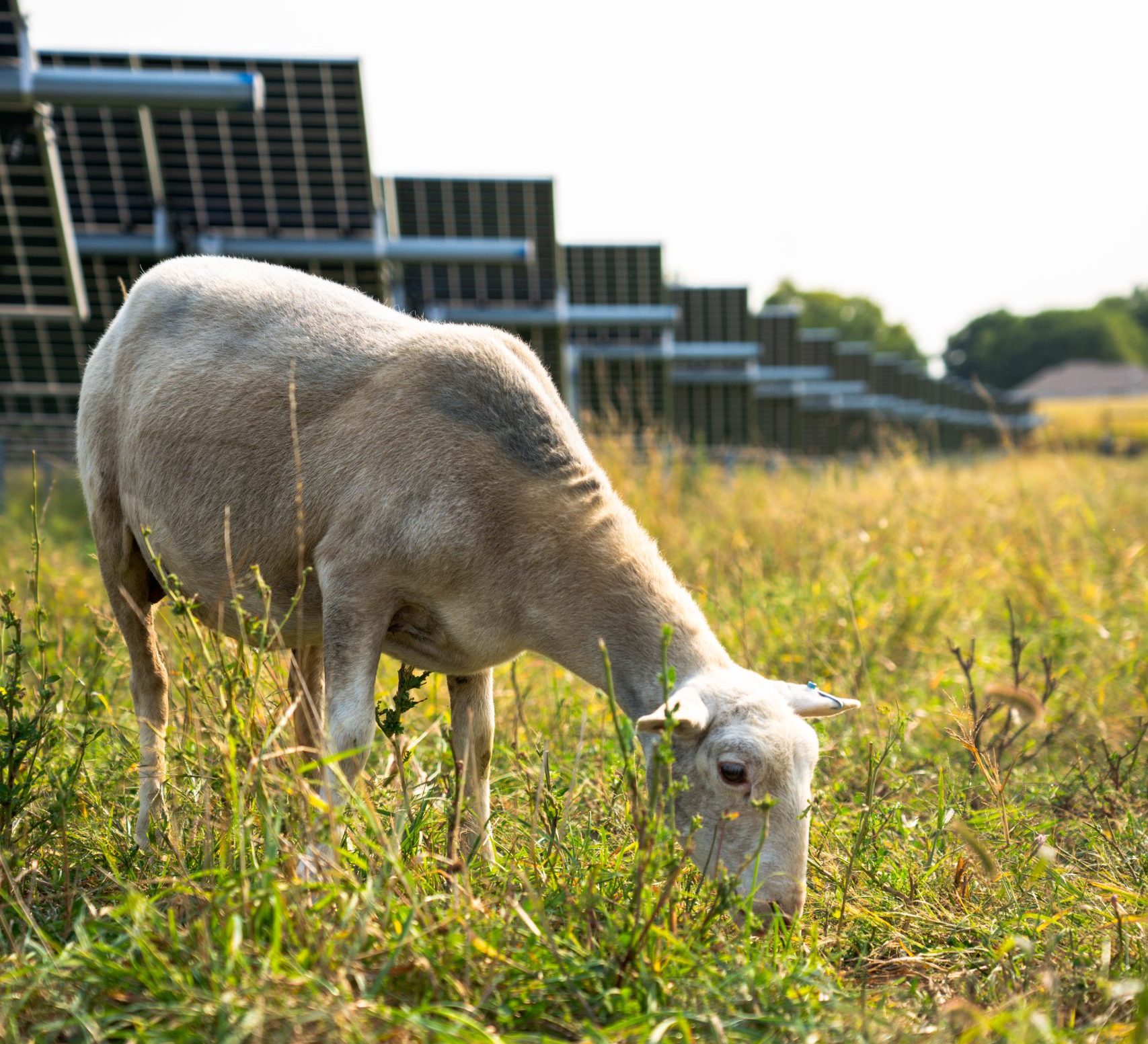
Agrivoltaics, which couple managed grazing with solar panels on agricultural land, create myriad opportunities to support hardworking farmers, improve rural economies, and expand clean energy in America. The American Solar Grazing Association, a farmer-led-and-founded organization that provides technical assistance, outreach, and research on agrivoltaics, has documented over 600 agrivoltaic sites across the U.S. totaling 130,000 acres grazed.
At our recent webinar, Executive Director Stacie Peterson explained the marriage of farm animals and solar panels is a fruitful one, since grazing and solar scale together without the need for operations to adapt substantially on either end. Crucially, Stacie said, this doubly beneficial arrangement provides additional, more stable income to farmers fighting to stay afloat amid turbulent circumstances for small, independent family farms.
Because agrivoltaics open up land, capital, and market opportunities for the folks whose animals graze under the panels, ASGA has noticed agrivoltaics enable younger farmers and those from some underrepresented backgrounds to be involved in ways that other farming practices often preclude. Greg Gunthorp, a farmer and grazier in Indiana, knows firsthand the profound positive impact of agrivoltaics on businesses like his.
“To get paid to control the vegetation on solar sites, it’s just a huge opportunity for us to bring additional cash flow, predictable cashflow, into our operation,” he said.
Greg, who employs more local workers from his grazing operation than he would through crops alone, is among the many rural people using this model to create jobs and opportunities in local communities.
And many communities throughout the U.S. are ripe for reaping these benefits, too. Through research from Lightsource bp, a utility-scale solar developer that works globally, Agrivoltaics and Land Management Director Lexie Hain has seen how the majority of our country could support agrivoltaics. Many may wonder if their climate is suitable for agrivoltaics, but Lexie said regional growers and their supporters know how to tailor their operations to the unique conditions present in each locale.
With the right local know-how and public support, said Lexie, agrivoltaics “provide meaningful employment and good jobs.”
AN ARRAY OF BENEFITS
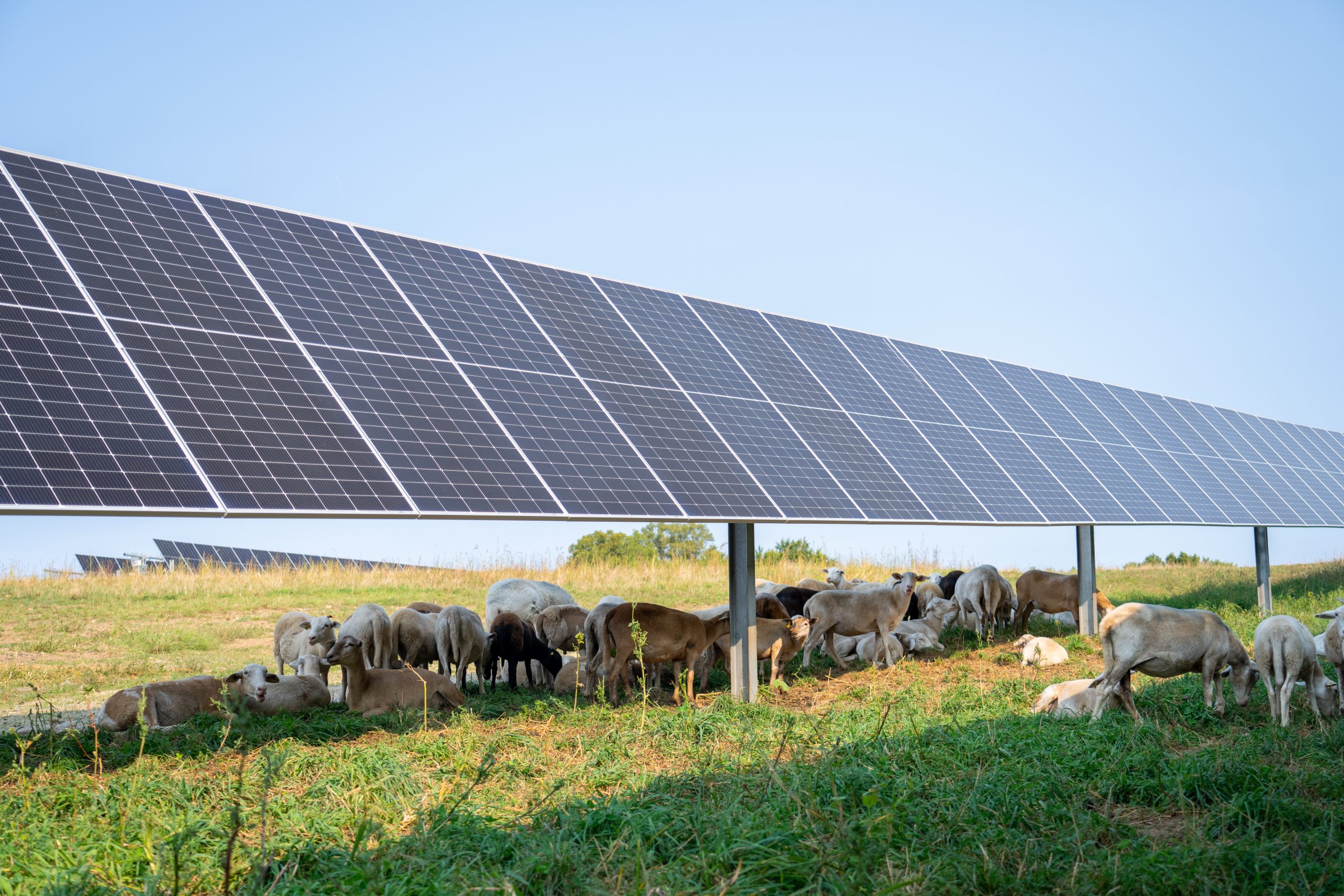
The upshot of deploying agrivoltaics extends far beyond the renewable energy generated at these sites. The shade from the panels is a boon to the animals, the soil, and the plants underneath the arrays. ASGA research shows reduced skin temperatures in animals who graze under panels compared to animals who graze openly in the sun.Improved soil health, reduced runoff, and the creation of pollinator habitat are all additional upsides that agrivoltaics can offer. Plus, farm animals reap the benefits from the panels anytime they can stay cool in the shade, warmer in the nighttime, or protected from the elements during harsh weather.
“When it’s miserably hot and we have a heat dome passin’ through the Midwest, our sheep are shaded,” said Greg, the Indiana grazier whose animals lamb out in the fields among the panels. “On those early May days when it’s still cool, it’s drizzly, our baby lambs have protection from that drizzling, yet they still have all of the feed that they want.”
While agrivoltaic operations most commonly rely on sheep to graze the land, animals ranging from chickens to cattle have all proven worthy agrivoltaic investments. And on many lands in the west, for example, where cattle ranching has degraded the soil, adding in agrivoltaics offers farmers and landowners an opportunity to regenerate that resource.
GOLDEN HOUR FOR AGRIVOLTAICS
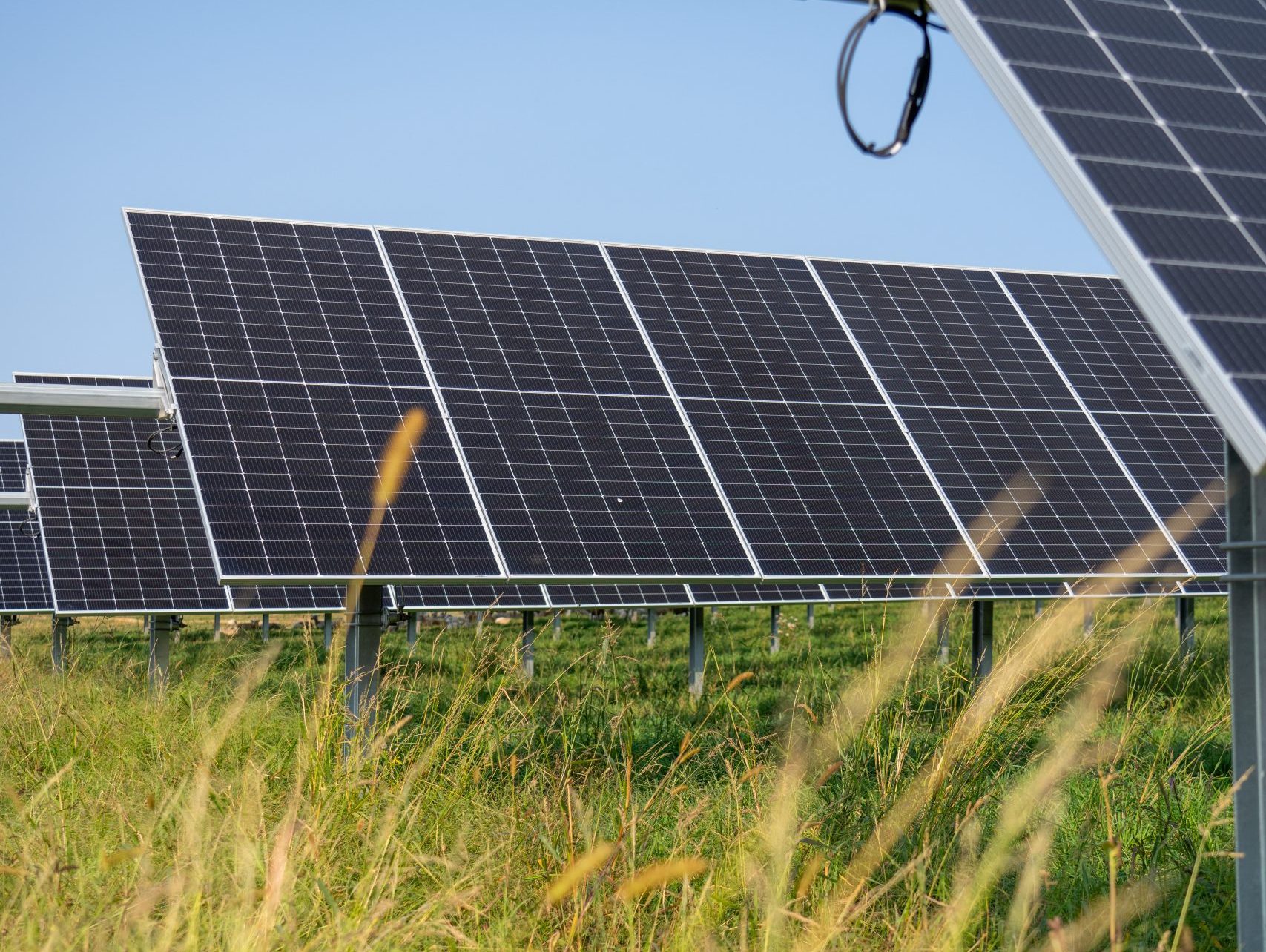
Our strategic investments in groups like the Colorado Agrivoltaic Learning Center are an essential ingredient to scaling agrivoltaics and their benefits. Byron Kominek in Longmont, Colorado works with a small team that provides informational materials to local governments and brings in community members to experience their solar-grazed, vegetable-producing farm firsthand.
Our research into effective messaging for siting rural renewable developments highlights the dramatic benefits from providing good, trustworthy information from credible sources to increase buy-in for opportunities like agrivoltaics. When rural focus groups learned, for example, “One acre of solar panels can power 80 homes,” their support for solar increased noticeably. And while a leading concern for scaling renewable energy deployment in rural America is the land required to site it, focus group and poll respondents loved the idea of pairing renewable energy with livestock. Explaining the possibility of this dual use approach to land management substantially reduced concerns about siting solar on farmland.
It’s critical we work with partners like these to advance the broader understanding of the benefits our rural neighbors can achieve through agrivoltaics. With renewable energy increasingly in the crosshairs of opposition forces, we’re poised at a pivotal moment for the movement and its impacts in rural America.
“It’s important,” Byron urged, “to build solar arrays right now for tomorrow.”
 English (UK)
 English (United States)
 Spanish (Mexico)
 Spanish (Spain)
 Catalan
 Basque
 Chinese (China)
 Chinese (Hong Kong)
 Chinese (Taiwan)
 Vietnamese
 Arabic
 Moroccan Arabic
 German
 French (France)
 French (Canada)
 Urdu
 Gujarati
 Hindi
 Persian
 Greek
 Hebrew
 Lao
 Ukrainian
 Thai
 Uzbek
 Uighur
 Tatar
 Turkish
 Telugu
 Tamil (Sri Lanka)
 Tamil
 Silesian
 Swahili
 Swedish
 Serbian
 Albanian
 Slovenian
 Saraiki
 Slovak
 Sinhala
 Sindhi
 Sakha
 Romanian
 Rohingya
 Portuguese (Portugal)
 Portuguese (Brazil)
 Portuguese (Angola)
 Pashto
 Polish
 Panjabi
 Occitan
 Norwegian
 Nepali
 Dutch
 Norwegian
 Myanmar
 Malay
 Mongolian
 Malayalam
 Macedonian
 Latvian
 Lithuanian
 Kyrgyz
 Kurdish
 Korean
 Kannada
 Khmer
 Kazakh
 Kabyle
 Georgian
 Javanese
 Japanese
 Italian
 Icelandic
 Indonesian
 Armenian
 Hungarian
 Upper Sorbian
 Croatian
 Hazaragi
 Galician
 Scottish Gaelic
 Frisian
 Friulian
 Finnish
 Estonian
 Dzongkha
 Lower Sorbian
 Danish
 Welsh
 Czech
 Cebuano
 Bosnian
 Tibetan
 Bengali
 Bulgarian
 Belarusian
 Azerbaijani
 Assamese
 Aragonese
 Amharic
 Afrikaans